
Ornithological surveys are a cornerstone of responsible onshore wind energy development. During planning and design, they establish which species are present, how they use a site and its surroundings, and how a proposed development could affect them. Alongside bat activity surveys and habitat assessments, this evidence helps developers address legislative and policy requirements and identify measures to reduce the risk of collision, disturbance, displacement and habitat loss. Once a wind farm is operational, repeat surveys can document changes in bird distribution, bat activity and habitat condition, informing the management of the site over its operational lifetime.
Over the past 12 years, BiOME Consulting’s team of ornithologists and ecologists has supported wind farm proposals and operational sites across England, Wales and Scotland, from Norfolk to Nottinghamshire, from Caithness to Glamorgan. Our work to inform Environmental Impact Assessment includes breeding and wintering Vantage Point (VP) surveys in line with NatureScot (2024) guidance, upland wader surveys (Brown & Shepherd, 1993), breeding and wintering bird walkover surveys and targeted nocturnal surveys (Bird Survey & Assessment Steering Group, 2026). Early habitat assessments and species-specific fieldwork can identify sensitive features such as peatland, woodland edges and regularly used flight routes while there is still scope to refine turbine and infrastructure layouts. Where collision risk modelling is required, VP surveys provide flight data to help estimate the risk posed by the proposed layout and inform measures such as turbine micro-siting or operational curtailment during periods of heightened risk.
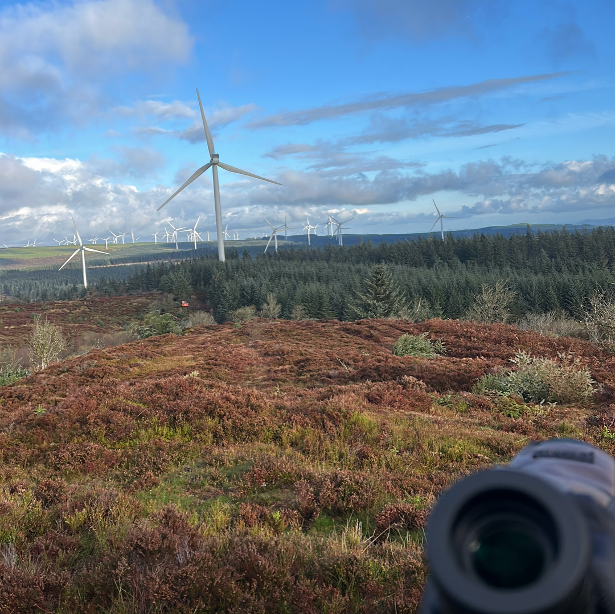
A VP survey being conducted at a site in Wales © Myles Tomlinson
Across our surveys, we have recorded internationally important numbers of wintering Whooper Swan Cygnus cygnus and Bewick’s Swan Cygnus columbianus bewickii, lowland-breeding raptors such as Marsh Harrier Circus aeruginosus and Hobby Falco subbuteo, and passage species including Dotterel Charadrius morinellus and Osprey Pandion haliaetus. At a proposed wind farm in the Cambridgeshire Fens, adjacent to the Nene Washes Special Protection Area (SPA), VP surveys, dawn and dusk passage watches, and roost surveys recorded large commuting and feeding flocks of Whooper Swan, Pink-footed Goose Anser brachyrhynchus, Lapwing Vanellus vanellus and Golden Plover Pluvialis apricaria, as well as Ruff Calidris pugnax, Hen Harrier Circus cyaneus and Goshawk Astur gentilis. These observations help assess how birds moving between feeding and roosting areas might interact with the proposed development. Targeted surveys elsewhere have confirmed breeding Nightjar Caprimulgus europaeus at several sites.
Our upland surveys have recorded assemblages that include Red Kite Milvus milvus, Merlin Falco columbarius, Hen Harrier, Curlew Numenius arquata, Golden Plover, Lapwing and Snipe Gallinago gallinago. At an operational wind farm in Aberdeenshire, where we have provided ecological monitoring and advice for much of its operational life, the autumn Golden Plover programme uses four visits across September and October to map numbers and distribution within the Habitat Management Area and a 500-metre buffer.
At an operational wind farm in Powys, upland walkovers focus on habitat suitable for breeding Curlew. Where Curlew are recorded, follow-up surveys can document breeding behaviour, flight routes and key foraging areas. The 2026 programme that we have conducted also includes breeding-season vantage point surveys to collect flight data for collision risk modelling if required, alongside advice to specialist predator control contractors. Seasonal monitoring with automated bat detectors follows the methods used in previous years, while repeat surveys of permanent quadrats track vegetation in peatland and habitat reinstatement areas. Newly planted hedgerows are also checked for establishment and maintenance requirements.
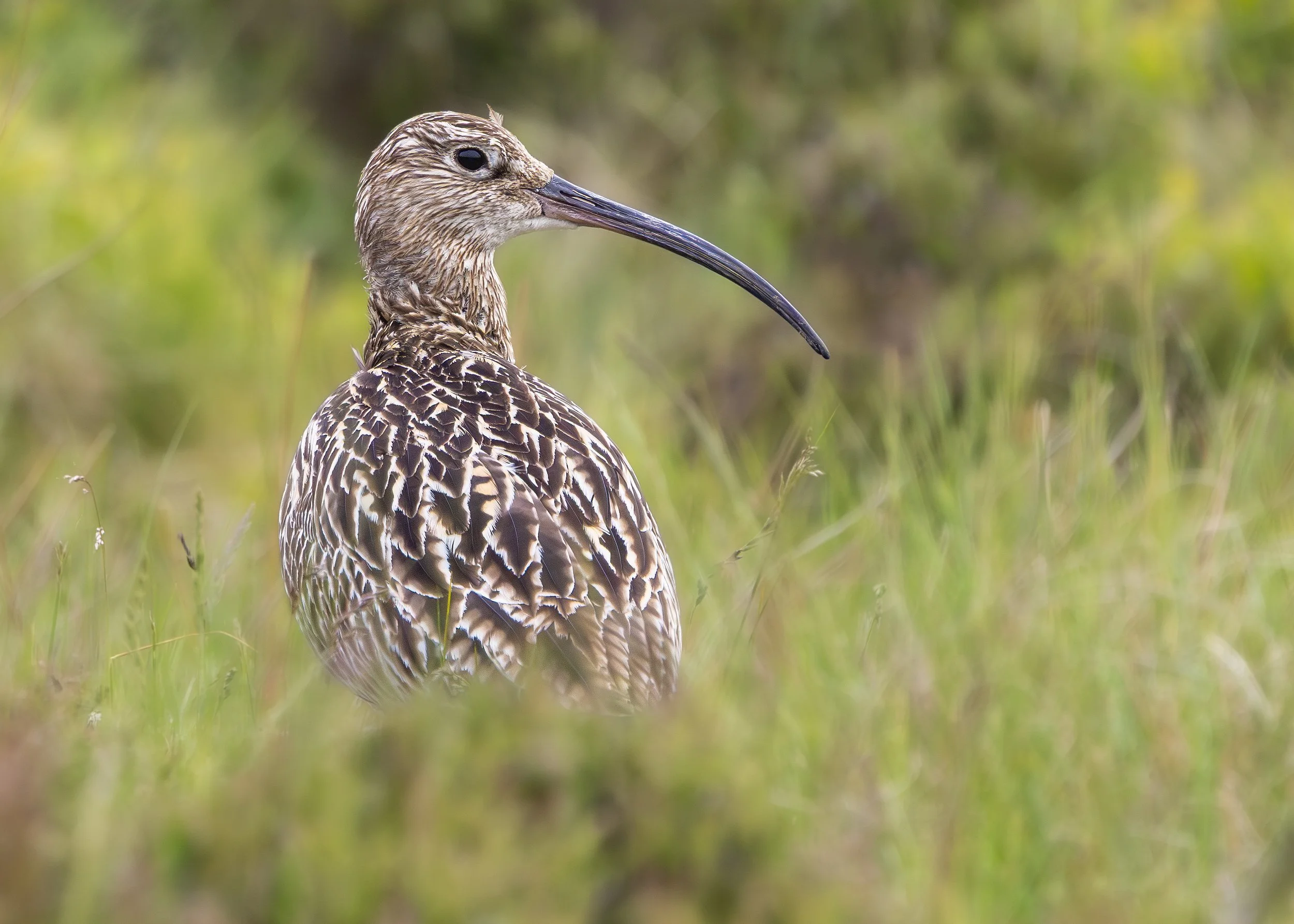
A Curlew recorded on a survey on a windfarm site in North Yorkshire © Nathaniel Dargue
Research on Welsh Red Kites illustrates why the scale of assessment matters. Population viability analysis by Hereward et al. (2024) suggests that collision mortality from existing and proposed wind farms is unlikely to halt the species’ recovery across Wales under the scenarios modelled. Follow-up analysis by Hereward et al. (2025) examined populations associated with two SPAs, where the long-term consequences of additional mortality can differ from those projected for Wales as a whole. These findings underscore the importance of site-specific survey data and collision risk modelling when assessing proposals near areas regularly used by sensitive species.
From the first surveys for a proposed wind farm to repeat monitoring during operation, the evidence serves different decisions at each stage. Baseline surveys can guide turbine siting and mitigation while plans are being developed. Post-construction monitoring can show how birds use managed areas, how recorded bat activity varies over time and how reinstated habitats develop, giving operators evidence to guide ongoing management.
Author: Myles Tomlinson, BiOME Graduate Ornithologist
References
Bird Survey & Assessment Steering Group. (2026) Bird Survey Guidelines for assessing ecological impacts, v.1.1.1.
Brown, A. F. and Shepherd, K. B. (1983). A method for censusing upland breeding waders. Bird Study, 40: 3,189—195.
Hereward, H.F.R., Macgregor, C.J., Gabb, O., Connell, A., Thomas, R.J., Cross, A.V. & Taylor, R.C. (2024). Modelling population-level impacts of wind farm collision risk on Welsh Red Kites. BTO Research Report 766: British Trust for Ornithology, Thetford, UK
Hereward, H.F.R., Macgregor, C.J., Gabb, O., Connell, A., Thomas, R.J., Cross, A.V. & Taylor, R.C. (2025). Modelling population-level impacts of wind farm collision risk on Welsh Red Kites: populations functionally linked to two Special Protection Areas. BTO Research Report 799: An addendum to Research Report 766. British Trust for Ornithology, Thetford, UK
Scottish Natural Heritage (2014). Recommended bird survey methods to inform impact assessment of onshore windfarms.