
In our previous article on onshore wind farms, we described how ecological surveys inform project design and guide site management during operation. The same principle applies to solar energy development. Early surveys establish which species and habitats are present, how wildlife uses the site and surrounding land, and where a proposal could affect features of conservation importance. In arable landscapes, this evidence can also help identify opportunities to create or improve habitats through careful siting, layout and long-term management.
At BiOME Consulting, we support solar developments from Preliminary Ecological Appraisal (PEA) and targeted species surveys through to construction supervision and the discharge of planning conditions. For projects in Staffordshire and Cheshire, our breeding and wintering bird surveys have included nocturnal fieldwork. Surveying across seasons and at different times of day helps build a fuller picture of how birds use a site for breeding, feeding and roosting, and provides an evidence base for assessing potential impacts and informing design. At some sites we have also conducted species specific surveys, including Barn Owl Tyto alba and Quail Coturnix coturnix surveys.
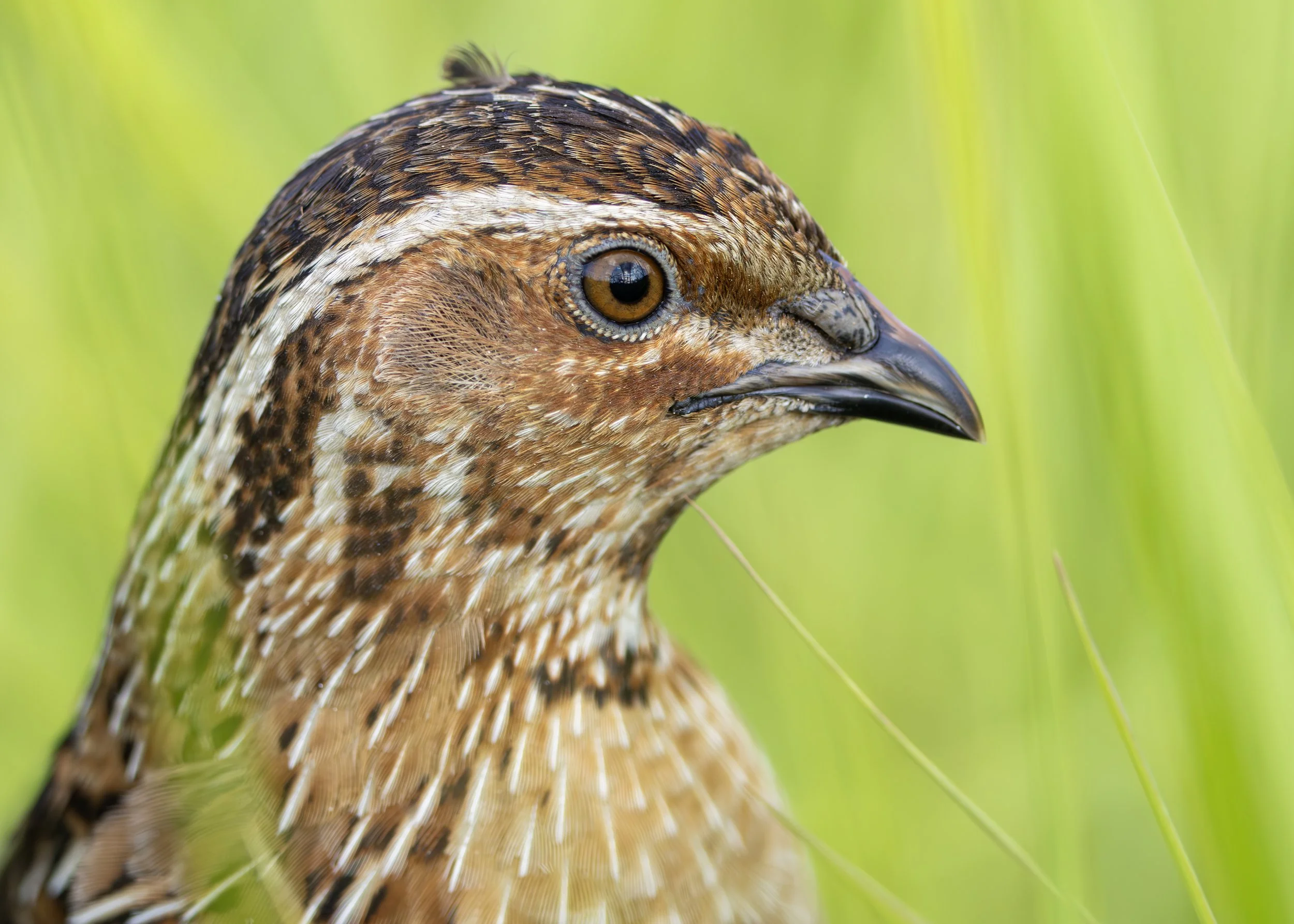
A Common Quail Coturnix coturnix in North Yorkshire © Nathaniel Dargue
At a proposed solar development in Kent, we combined a PEA with breeding and wintering bird surveys, acoustic monitoring and nocturnal fieldwork to assess potential effects on statutory designated sites and protected species. Sometimes bird surveys record records of non-avian species. Nocturnal surveys often result in mammal sightings, at the site in Kent we recorded numerous sightings of Badger Meles meles and two Water Voles Arvicola amphibius. Breeding bird surveys here also recorded insects, with evidence of a population of Norfolk Hawker Aeshna isoceles.
In Norfolk, we are currently undertaking wintering bird surveys for a solar proposal being progressed through the Development Consent Order (DCO) process. These surveys will help assess how birds use the site and surrounding land in relation to nearby designated sites. Our experience with major grid infrastructure in the region has also informed our approach to the proposal’s grid infrastructure.
At the site of a proposed solar farm, surveyed by BiOME in North Yorkshire, surveys recorded a good population of Corn Bunting Emberiza calandra. A study at Westmill Solar Park in Oxfordshire, a site with an open layout and low-intervention management, Secker et al. (2026) documented five Corn Bunting nests within the park and observed additional birds carrying food beyond the park’s perimeter. This suggested that the park also provided foraging habitat for birds breeding nearby and highlights the importance of considering feeding and nesting habitat across the wider landscape. Understanding how Corn Bunting use the North Yorkshire site and surrounding farmland will help inform the scheme’s layout and habitat management.
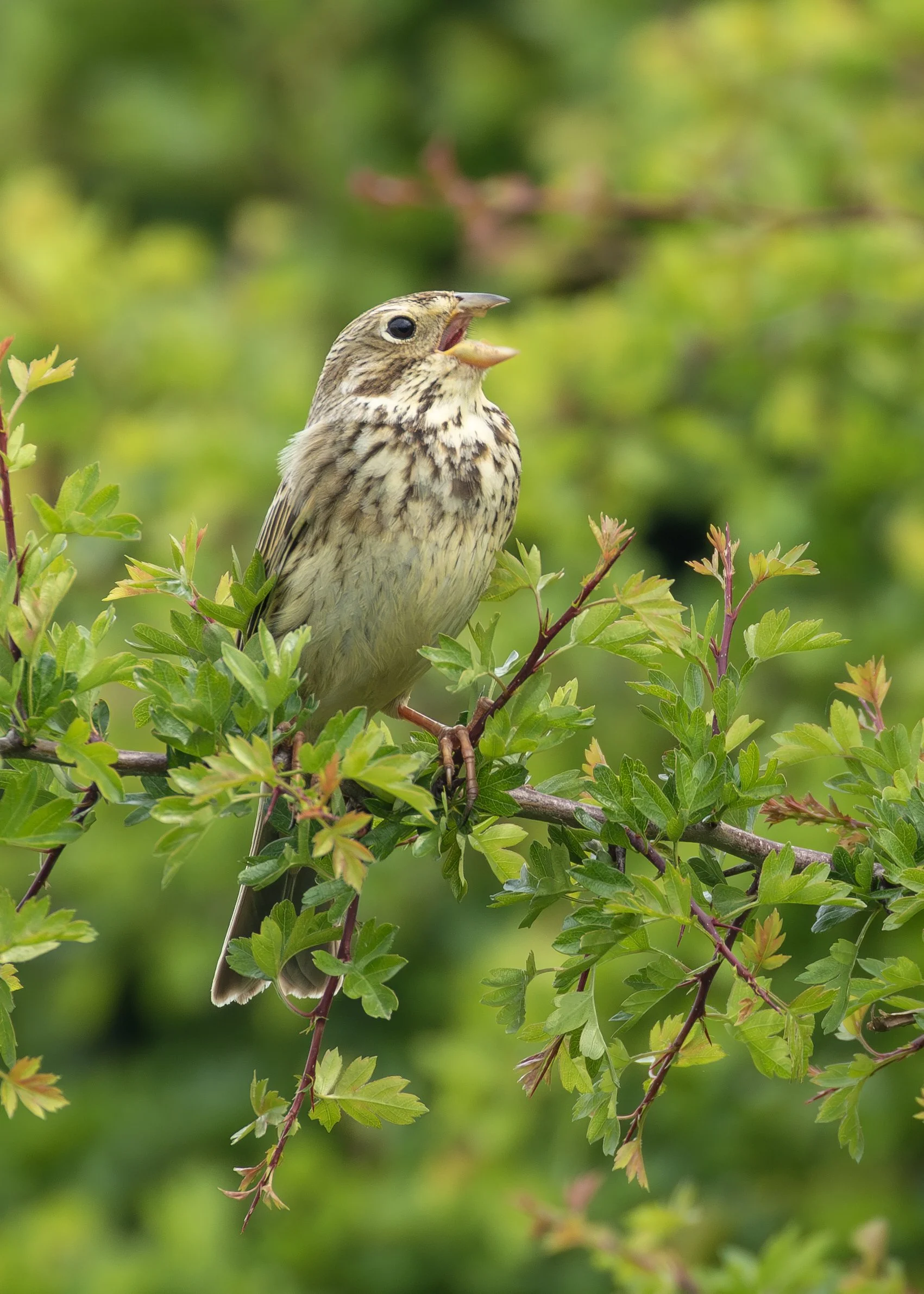
A Corn Bunting Emberiza calandra in North Yorkshire © Nathaniel Dargue
Management also matters for the wider farmland bird assemblage. Across six solar farms in the East Anglian Fens, Copping et al. (2025) found the highest bird abundance and avian species richness at sites managed to provide a mix of habitats. These sites supported more birds and more species than nearby arable farmland and included features such as taller, more varied grassland, flowering plants and hedgerows.
In Suffolk, having completed the ecological work for the planning submission, we are now supporting the discharge of planning conditions. This has included supervision by an Ecological Clerk of Works (ECoW) covering Great Crested Newt Triturus cristatus, nesting birds, Water Vole and Atlantic Salmon Salmo salar.
The ecological outcomes of solar developments depend on siting, design and long-term habitat management. Establishing the ecological baseline early helps developers identify where to retain important habitat and where to improve it. Construction supervision helps put the measures agreed during planning into practice. Through these steps, studies have shown that solar developments have the potential to improve the biodiversity of the site and even the surrounding area.
Author: Myles Tomlinson, BiOME Graduate Ornithologist
References
Copping, J. P., Waite, C. E., Balmford, A., Bradbury, R. B., Field, R. H., Morris, I., & Finch, T. (2025). Solar farm management influences breeding bird responses in an arable-dominated landscape. Bird Study, 72(3), 217–222.
Secker, B.M., Walker, N.S. and Sharp, S.P. (2026). Observations on the use of a solar park by Corn Buntings in southern England. British Birds, 119(4), pp. 208–217.