
During the spring and summer of 2025, BiOME Consulting was commissioned to undertake breeding bird surveys at sites in Shropshire and Norfolk to inform proposed woodland creation. This work aimed to ensure that new woodlands could be delivered whilst safeguarding threatened species, that depend on open habitats.
Following a defined methodology set out in Forestry Commission guidance, each site was surveyed systematically across multiple visits between late March and early July. Surveys involved walkovers of each site to record evidence of breeding activity within the proposed planting footprints, using standard BTO two-letter species codes; observations of singing males, display flights, and adults carrying food contributed to a detailed picture of resident bird communities, with particular attention paid to ‘priority’ species of conservation concern.
The survey programme also included targeted surveys for breeding waders, which covered the site footprints and a 1km buffer area where access was permitted. Breeding status was classified as confirmed, where direct proof of nesting was recorded (e.g. eggs, young, fledged birds, adults carrying food, or used nests/eggshells); probable, where behaviour strongly suggested breeding, including repeated territorial activity, courtship, alarm-calling, distraction displays, reluctance to leave the area, or pairs observed in suitable nesting habitat; or possible, where birds were observed in potential nesting habitat during the breeding season but without stronger evidence of territorial or breeding activity.
At the conclusion of the survey period, territory maps illustrating the breeding distributions of these priority species were produced.
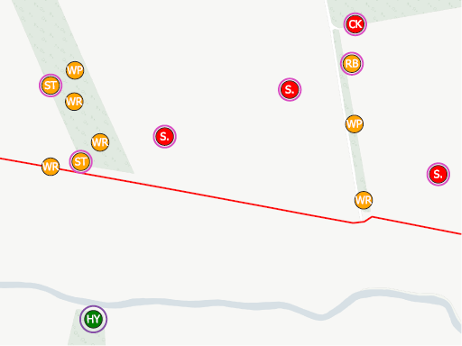
Sample territory mapping results © David Bratt
In Shropshire, surveys revealed a rich assemblage of breeding birds typical of the mixed upland farmland setting, including several Section 41 priority and Red- or Amber-listed species. Waders such as Curlew were present within the wider landscape, while a variety of open-country songbirds were confirmed to be breeding within the study area. The results underline the area’s importance for these species and highlight the need to balance woodland creation with the retention of key open features. Recommendations focused on maintaining a mosaic of habitats - including grassland, wet flushes, and scattered scrub - alongside measures such as delayed cutting and sympathetic hedgerow management to support both existing and emerging bird communities as the woodland develops.
In Norfolk, the proposed planting area lay within an agricultural landscape that supports a suite of breeding waders; Stone Curlew, Lapwing, Curlew, and Oystercatcher were recorded breeding within the study area, amidst a variety of other notable species of conservation concern. While woodland creation has ecological benefits, the findings emphasise the importance of careful site design to avoid the loss of breeding habitat for these declining farmland waders and other priority species. Retaining open ground, incorporating wide field margins and ensuring a varied edge structure, will help maintain suitable conditions for these species, while allowing woodland to establish in less sensitive areas.
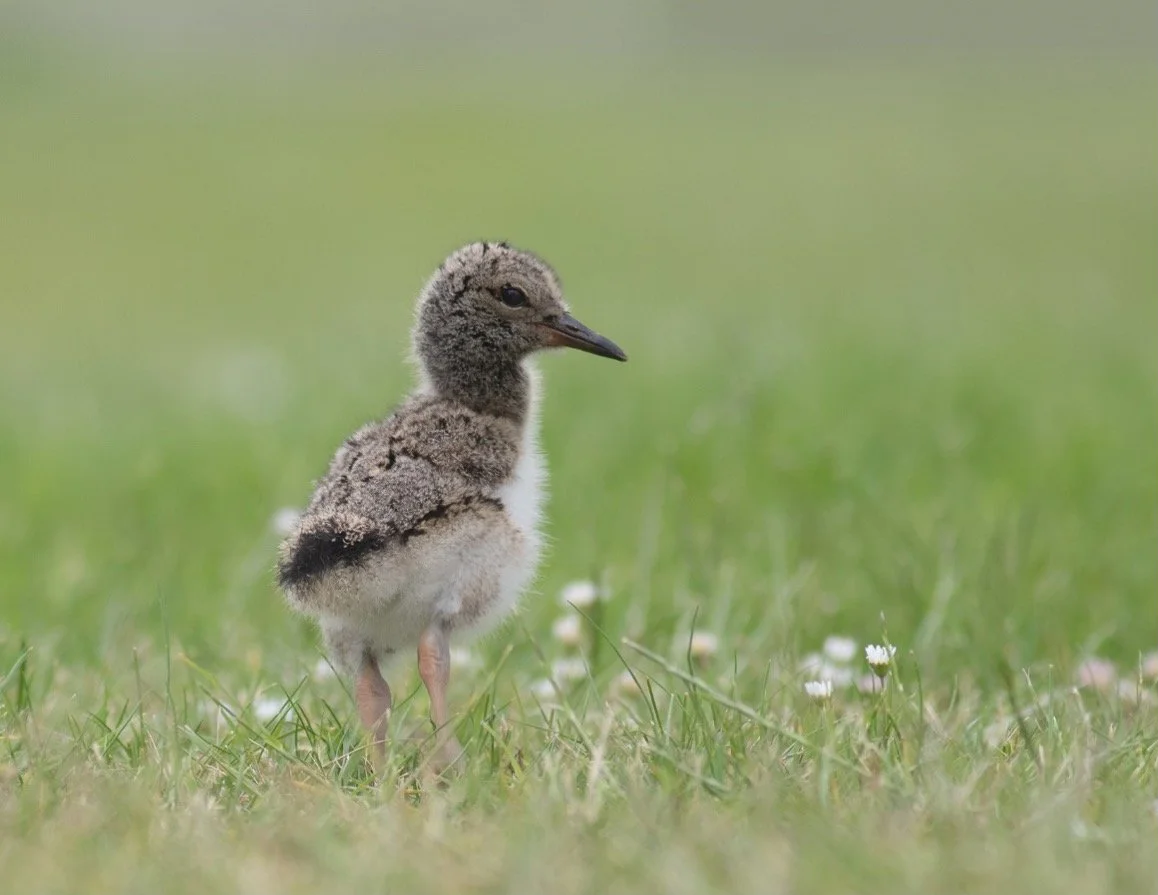
Recently fledged OystercatcherHaematopus ostralegus © David Bratt
Across both projects, the surveys have provided valuable baseline data to guide responsible woodland expansion. England’s drive for increased tree cover to support climate change mitigation and meet timber production objectives continues, with both England and Scotland pledging to increase woodland cover from 10% to 12% by 2050. In this context, understanding how existing wildlife uses the landscape remains vital. By integrating sound ecological evidence with thoughtful design, it is possible to deliver new woodland creation schemes that enhance, rather than inadvertently diminish, the biodiversity value of the landscapes they occupy.
Author: Myles Tomlinson, BiOME Graduate Ornithologist